When someone you love is living with memory loss, changes in conversation, routines, and relationships can affect the whole family. For families exploring the benefits of socialization for dementia, the key idea is simple: meaningful connection can support emotional well-being, engagement, and a sense of belonging.
The Brain Science Behind Social Connection
Conversation and shared experiences ask the brain to use several skills at once, including attention, language, recognition, and recall. For a person living with dementia, these moments can provide familiar stimulation without turning everyday life into a test.
The relationship between cognitive decline and social engagement is complex, and social connection is not a treatment or cure for dementia. Still, regular opportunities to talk, listen, sing, laugh, create, and spend time with others can support quality of life and help a person remain involved in the world around them.
Why Dementia Isolation Risks Matter
Dementia isolation risks can become more noticeable as memory loss progresses. A person may stop initiating conversations, feel less comfortable in unfamiliar settings, or pull away from programs they once enjoyed. Communication changes related to dementia can also make social situations more tiring.
Periods of isolation may affect daily life in several ways:
- Fewer opportunities for conversation, recognition, and shared experiences.
- Less motivation to participate in routines or enjoyable programs.
- More time spent alone with worry, frustration, or confusion.
- Fewer chances for family members and others to notice changing preferences or needs.
The goal is not constant social stimulation. Some people prefer quiet one-on-one interaction, while others enjoy small groups or larger gatherings. Respecting those preferences is part of creating meaningful connection.
How Group Programs Create Meaningful Engagement
Well-planned memory care community programs focus on supporting the individual rather than expecting everyone to enjoy the same experience. Familiar interests, personal history, abilities, and energy level can all shape what feels comfortable and worthwhile.
Examples of therapeutic group programs for dementia and other connection-focused experiences may include:
- Music sessions built around familiar songs and rhythms.
- Art or creative programs that encourage expression without relying on words.
- Gardening or nature-based programs with simple, purposeful tasks.
- Reminiscence conversations centered on photos, traditions, or life stories.
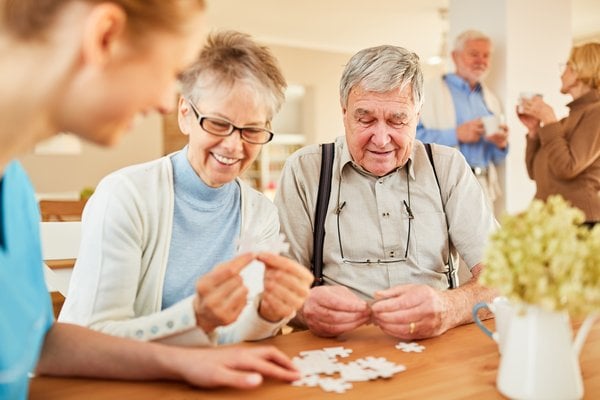
- Small-group meals, games, or celebrations that encourage natural conversation.
These memory care social opportunities can be especially valuable when participation is flexible. A person may enjoy a group one day and prefer a quieter conversation the next. The most supportive approach leaves room for both.
Families comparing memory care options for a loved one can find helpful guidance in our Finding Your Memory Care Community Match episode.
Connection Can Be Personal
Meaningful engagement in memory care or at home does not always happen on a calendar. A shared joke at lunch, completing a simple task like setting the table, listening to a favorite song, or talking about a familiar photograph can create connection without feeling forced.
Social Connection Across the Four Stages of Dementia
The Disappearing Mind organizes conversations around four stages of understanding for families supporting someone living with dementia: “I’m Thinking About,” “I’m Worried About,” “I’m Dealing With,” and “I’m Planning For.” That framework recognizes that questions about connection can change as dementia progresses.
Early on, families may wonder whether withdrawing from friends is a warning sign or how to encourage healthy routines. Later, the focus may shift toward maintaining relationships when conversation becomes harder, finding meaningful ways to spend time together, or deciding when additional support could help.
Across every stage, connection can take different forms. The goal is not to recreate how someone socialized years ago. It is to meet the person where they are now.
Supporting Family Connections
Family relationships remain important even when memory and communication change. A visit does not need to be elaborate to be meaningful. Sitting together, listening to music, looking through photographs, sharing a favorite snack, or simply offering calm companionship can create a positive moment.
Families may also find it helpful to follow the person’s cues. If a long conversation becomes tiring, shorter visits may feel better. If questions create frustration, commenting on what is happening in the moment can make interaction easier.
Staying Connected Throughout the Dementia Journey
Social connection cannot erase dementia, but it can help preserve meaningful moments, relationships, and participation as needs change. The Disappearing Mind offers conversations for families and caregivers at each stage of the journey, with guidance designed to make difficult questions feel more understandable.
Subscribe to The Disappearing Mind for conversations that can help you feel more informed, prepared, and connected throughout the dementia journey.